
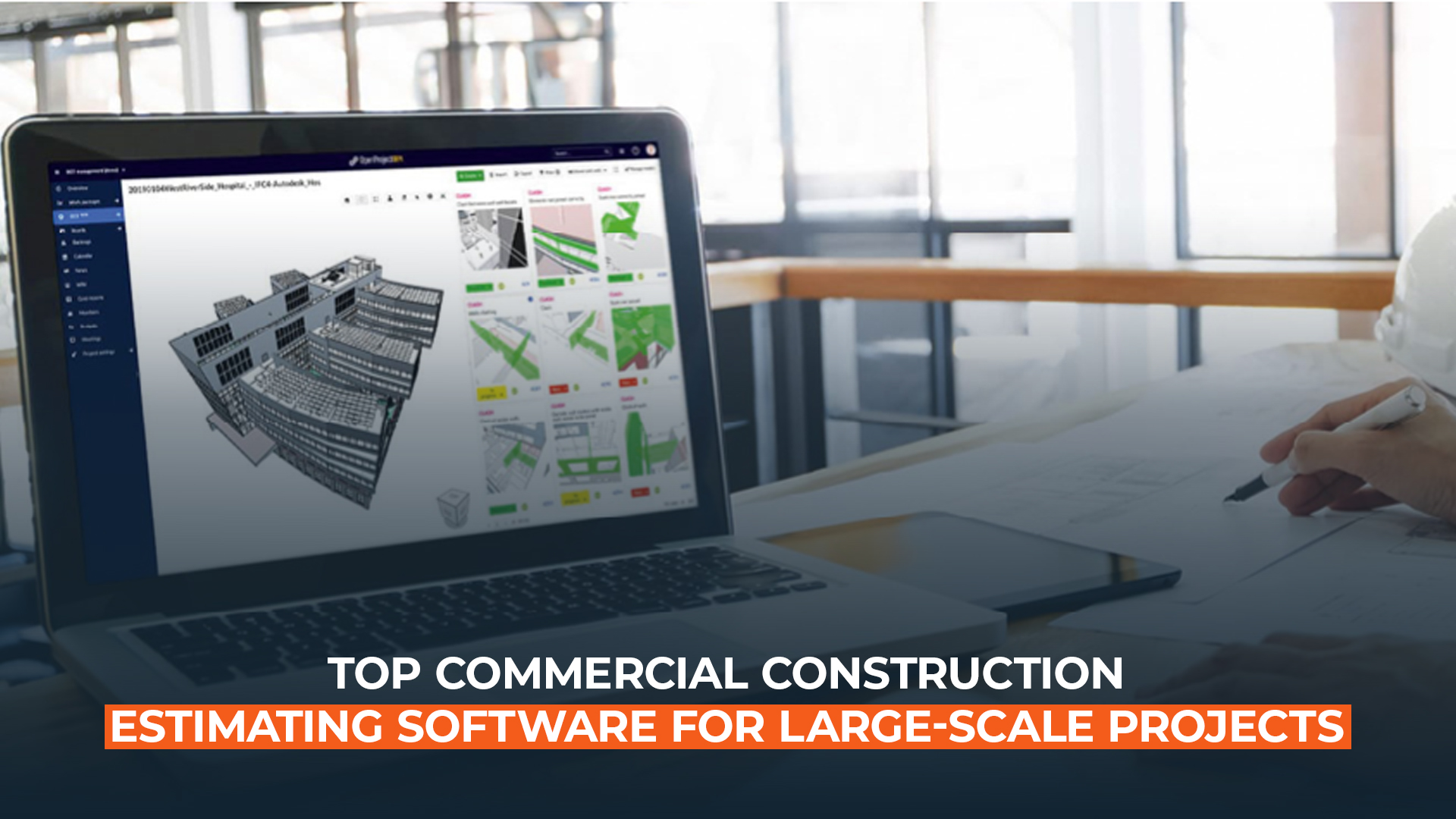
Large-scale commercial construction demands sophisticated estimating capabilities that manual processes cannot effectively provide. Commercial construction estimating software has evolved into comprehensive platforms managing complex calculations, extensive databases, and integrated workflows essential for competitive bidding.
Modern estimating technology transforms how general contractors approach large projects through automation, accuracy improvements, and enhanced collaboration. Consequently, software selection significantly impacts operational efficiency, bid success rates, and project profitability. Understanding available platforms and their capabilities enables informed decisions matching organizational needs and project requirements.
Essential Features of Construction Estimating Software for General Contractors
Professional-grade estimating platforms must deliver robust functionality addressing the complexity inherent in commercial projects. These systems integrate multiple capabilities within unified environments supporting systematic estimate development.
Database Management Comprehensive material and labor databases form the foundation of accurate estimating. Leading platforms maintain extensive libraries containing thousands of construction items with detailed specifications and current pricing. Database customization allows contractors to incorporate company-specific costs, preferred suppliers, and historical performance data.
Real-time pricing integration connects estimating systems with supplier networks ensuring cost accuracy. Automatic updates eliminate manual price research while reducing estimate preparation time. Furthermore, regional cost adjustments account for geographic variations without requiring separate database versions.
Digital Takeoff Capabilities Integrated takeoff functionality eliminates redundant data entry between measurement and estimating processes. Advanced platforms support multiple measurement types including linear, area, volume, and count quantities directly from digital plans. On-screen measurement tools provide precision exceeding manual methods while documenting quantity sources for verification.
Professional quantity takeoff services complement software capabilities by providing expert review and validation for complex projects requiring specialized analysis.
| Software Feature | Operational Benefit | Impact on Large Projects |
| Cloud-Based Access | Multi-user collaboration | Simultaneous team work across locations |
| API Integrations | Seamless data exchange | Connected project workflows |
| Report Customization | Flexible presentation | Client-specific deliverables |
| Version Control | Change tracking | Design iteration management |
| Historical Analytics | Performance insights | Continuous improvement |
Leading Platforms for Best Estimating Software for Construction
Several established platforms dominate the commercial construction estimating market. Each offers distinct advantages addressing different organizational priorities and project types.
ProEst ProEst delivers cloud-based estimating with exceptional database depth and customization flexibility. The platform supports detailed assemblies, comprehensive cost tracking, and extensive reporting capabilities. Integration with project management systems creates connected workflows spanning preconstruction through closeout.
The software excels at handling large commercial projects requiring multiple estimate versions and detailed scope analysis. Template libraries accelerate estimate development while maintaining consistency across project types. Additionally, ProEst provides robust permissions management enabling controlled access for diverse team members.
Sage Estimating Sage Estimating combines traditional desktop power with modern connectivity. The platform features sophisticated database management, detailed cost code structures, and comprehensive reporting. Long-established in commercial markets, Sage maintains extensive historical cost data supporting accurate forecasting.
Integration with Sage accounting platforms streamlines financial workflows. Change order management capabilities track scope modifications throughout project lifecycles. Furthermore, Sage supports complex organizational structures including multiple divisions and regional operations.
Specialized Solutions for Complex Projects
RSMeans Data Online RSMeans provides industry-standard cost databases utilized across the construction sector. The platform delivers detailed unit costs, assemblies, and location factors supporting conceptual through detailed estimating. Regular updates maintain pricing currency while extensive historical data enables trend analysis.
Many contractors supplement proprietary estimating software with RSMeans data ensuring comprehensive cost coverage. The platform particularly benefits preliminary estimating services requiring reliable benchmarks during early project phases.
PlanSwift PlanSwift emphasizes visual takeoff capabilities with intuitive measurement tools. The platform handles diverse file formats including PDF plans and CAD drawings. Customizable assemblies and templates adapt to contractor-specific methodologies and scope definitions.
While primarily focused on takeoff functionality, PlanSwift integrates with various estimating platforms. This flexibility supports contractors preferring specialized measurement tools combined with robust pricing engines. Additionally, the software accommodates both residential construction estimating and commercial applications.
Cost Estimating Software for Construction Management Integration
Modern estimating platforms extend beyond bid preparation into comprehensive project management ecosystems. Integration capabilities create connected workflows eliminating data silos and improving information flow.
Procore Estimating Procore integrates estimating within its broader construction management platform. This unified approach connects preconstruction activities with project execution seamlessly. Estimate data transfers directly into project budgets, change orders, and cost tracking systems.
The platform benefits contractors managing complete project lifecycles through single-system environments. Collaboration features enable real-time stakeholder input during estimate development. Furthermore, mobile access supports field estimating and immediate client presentations.
Buildertrend Commercial Buildertrend expanded from residential markets into commercial applications maintaining its user-friendly interface. The platform combines estimating, scheduling, client communication, and financial management. Integrated approach reduces software licensing costs while simplifying training requirements.
Contractors handling mixed portfolios including commercial construction estimating and residential projects appreciate Buildertrend’s versatility. Template systems accelerate estimate preparation while customization accommodates project-specific requirements.
Financial System Connectivity
Accounting integration represents critical functionality for large general contractors. Estimate data should flow seamlessly into cost accounting systems preventing duplicate entry and ensuring budget accuracy.
Leading platforms connect with QuickBooks, Foundation, Sage 300, and other construction accounting systems. Automated data transfer maintains consistency between estimated and actual costs throughout projects. Additionally, integration enables real-time budget monitoring and variance analysis supporting proactive cost management.
Commercial building estimate preparation benefits substantially from these integrated approaches through improved accuracy and reduced administrative overhead.
Construction Project Estimating Software for Trade Contractors
Specialized trades require estimating platforms addressing discipline-specific requirements and calculation methodologies. Trade-focused software incorporates industry knowledge and standard practices streamlining estimate development.
Electrical Estimating Platforms Electrical estimating services utilize specialized software calculating circuit loads, conduit requirements, and device quantities. Platforms like Accubid and ConEst maintain comprehensive electrical component databases with current pricing.
Advanced features include voltage drop calculations, panel schedules, and NEC compliance checking. Labor units reflect electrical installation productivity standards ensuring realistic crew sizing. Furthermore, change order management tracks scope additions common in electrical work.
Mechanical and HVAC Software Mechanical estimating services demand sophisticated load calculations and equipment sizing capabilities. Specialized platforms incorporate psychrometric analysis, duct sizing algorithms, and refrigeration cycle calculations.
QuoteSoft and FastEST serve mechanical contractors with HVAC-specific functionality. These systems generate equipment schedules, calculate linear ductwork quantities, and determine sheet metal requirements. Integration with CAD systems enables automated duct routing and material quantification.
Plumbing Estimation Tools Plumbing estimating services benefit from software calculating fixture units, pipe sizing, and drainage requirements. Platforms maintain extensive databases covering fixtures, valves, fittings, and specialty equipment.
Hydraulic calculations ensure adequate pressure throughout distribution systems. Fire sprinkler estimation modules calculate densities, pipe schedules, and hydraulic demands. Additionally, medical gas systems require specialized knowledge incorporated into advanced platforms.
| Trade-Specific Feature | Electrical | Mechanical | Plumbing |
| Load Calculations | Circuit analysis | Heating/cooling loads | Fixture units |
| Code Compliance | NEC requirements | IMC standards | IPC/UPC codes |
| Equipment Sizing | Panel schedules | Boilers, chillers | Water heaters, pumps |
| Distribution Analysis | Voltage drop | Duct sizing | Pipe sizing |
BIM-Integrated Estimating Solutions
Building Information Modeling revolutionizes quantity extraction and estimate accuracy for large commercial projects. BIM estimating services leverage three-dimensional models containing comprehensive component data supporting automated takeoffs.
Autodesk Construction Cloud Autodesk platforms integrate Revit modeling with Assemble and BIM 360 for comprehensive quantity management. Model-based takeoffs automatically update when designs change eliminating manual remeasurement. Component attributes including materials, dimensions, and specifications flow directly into cost calculations.
The integrated environment supports collaboration among architects, engineers, and estimators throughout design development. Clash detection identifies conflicts before construction preventing costly field changes. Furthermore, 4D scheduling capabilities link model elements with construction sequences supporting realistic planning.
Trimble Solutions Trimble combines modeling, estimating, and fabrication within connected platforms. Tekla structures and MEP Contractor support detailed modeling generating accurate material lists. Integration with field layout technology creates seamless workflows from design through installation.
Model-based estimation particularly benefits complex projects including industrial construction estimating where component quantities and coordination prove challenging through traditional methods.
Model Data Quality Considerations
BIM estimating accuracy depends on comprehensive model development and proper component attribution. Incomplete models or inadequate detail levels compromise quantity reliability requiring manual supplementation.
Level of Development (LOD) specifications define model element detail at various project phases. LOD 300 models provide sufficient geometry for preliminary quantities while LOD 400 supports fabrication-level accuracy. Estimators must understand model limitations and supplement extracted data appropriately.
Model validation confirms quantity accuracy before finalizing estimates. Comparing model-derived quantities against traditional takeoff methods identifies discrepancies requiring investigation. This verification protects against model errors affecting estimate reliability.
Cloud-Based Versus Desktop Estimating Platforms
Deployment methodology significantly impacts software accessibility, collaboration capabilities, and data security. Understanding advantages and limitations guides appropriate platform selection.
Cloud-Based Advantages Web-based platforms enable access from any location using internet-connected devices. Multiple users collaborate simultaneously on estimates without version control complications. Automatic updates ensure all team members utilize current software versions and database content.
Cloud solutions eliminate local server requirements and IT infrastructure investments. Subscription pricing converts capital expenses into operational costs improving financial flexibility. Additionally, cloud platforms typically include automatic backups protecting against data loss.
Desktop Software Benefits Locally installed applications provide complete functionality without internet dependency. Processing speed often exceeds cloud alternatives for complex calculations and large file manipulation. Contractors operating in areas with unreliable connectivity benefit from offline capabilities.
Desktop software may offer greater customization depth through direct database access and scripting capabilities. Established platforms accumulate extensive historical data within organizational systems. Furthermore, perpetual licensing arrangements appeal to contractors preferring ownership over subscription models.
Hybrid Deployment Strategies
Many contractors implement hybrid approaches combining desktop estimating with cloud-based collaboration. Primary estimate development occurs in robust desktop environments while cloud platforms facilitate stakeholder review and approval.
Synchronized databases maintain consistency between desktop and cloud systems. Estimators work offline during detailed takeoff and pricing activities then upload completed estimates for team review. This methodology balances productivity with connectivity benefits.
Database Development and Maintenance
Estimating software effectiveness depends heavily on database quality and currency. Comprehensive databases containing accurate pricing and realistic productivity values differentiate superior estimates from mediocre projections.
Historical Cost Data Collection Systematic actual cost tracking during construction provides invaluable database refinement. Comparing estimated quantities and prices against project actuals identifies systematic biases requiring correction. Post-project reviews document lessons learned improving future estimate accuracy.
Estimating consulting professionals assist contractors establishing data collection protocols and analysis methodologies. Structured approaches ensure consistent information capture supporting continuous improvement initiatives.
Supplier Integration Direct connections with material suppliers provide real-time pricing eliminating manual quote management. Leading distributors maintain electronic price files compatible with major estimating platforms. Automated updates ensure estimate accuracy while reducing research time substantially.
Negotiated pricing agreements require careful database management. Special pricing applies to specific projects or time periods necessitating version control and expiration tracking. Furthermore, volume discounts and freight considerations affect actual material costs beyond base prices.
Labor Productivity Standards
Accurate labor productivity assumptions prove critical for competitive yet profitable bidding. Labor estimating incorporates regional standards, crew compositions, and project-specific factors affecting installation rates.
Industry databases including RS Means and MCAA provide baseline productivity values. Contractors adjust these standards based on company experience, workforce capabilities, and project conditions. Documentation explaining adjustments supports estimate defense during value engineering or negotiations.
Productivity tracking during construction validates assumptions and guides database refinement. Comparing estimated hours against actual installation time identifies optimistic or conservative biases. Consequently, estimators continuously improve forecasting accuracy through systematic feedback incorporation.
Regional Software Considerations
Geographic operations influence software selection through varying market practices, code requirements, and database needs. Platforms supporting regional customization accommodate diverse operational territories.
Contractors operating in construction estimating services NYC markets require databases reflecting metropolitan union rates and material delivery premiums. Conversely, construction estimating services Texas operations utilize different labor structures and material availability.
Multi-Region Database Management Large contractors spanning multiple markets maintain separate database versions addressing regional variations. Location-based cost adjustments account for wage differences, material freight, and market competitiveness. Software supporting multiple cost databases enables accurate estimating across diverse territories.
Projects in construction takeoff services California face seismic design requirements affecting structural costs substantially. Similarly, construction estimating services Florida incorporate hurricane resistance measures. Database customization ensures estimates reflect jurisdiction-specific requirements accurately.
Regional platforms serving Pennsylvania, Illinois, Georgia, Ohio, Arizona, and North Carolina markets each require localized databases addressing market-specific conditions.
Training and Implementation Strategies
Software investment returns depend on effective implementation and comprehensive user training. Systematic adoption strategies maximize capability utilization while minimizing disruption.
Phased Rollout Approaches Gradual implementation reduces risk and allows learning before full commitment. Initial deployment on smaller projects builds user confidence and identifies system limitations. Parallel manual estimating during transition periods validates software output ensuring accuracy.
Champion users receive advanced training becoming internal resources supporting broader adoption. These power users develop templates, customize databases, and establish best practices. Furthermore, champions provide peer support more readily accepted than external consultants.
Ongoing Education Programs
Software capabilities evolve continuously through updates and new feature releases. Regular training ensures teams utilize current functionality maximizing investment value. Vendor-provided webinars, user conferences, and certification programs support continuous learning.
Internal training sessions share lessons learned and standardize organizational practices. Documentation including workflow guides, template libraries, and database standards promotes consistency. Additionally, new employee onboarding incorporates comprehensive software training ensuring immediate productivity.
Software Selection Criteria
Choosing appropriate commercial construction estimating software requires systematic evaluation balancing multiple factors. Decision frameworks guide objective assessment preventing emotional or superficial judgments.
Functional Requirements Assessment Document specific organizational needs before evaluating platforms. Required features, integration capabilities, and scalability requirements establish selection criteria. Project types, company size, and growth objectives influence functional priorities.
Demonstration projects test software capabilities using actual company data. Importing historical estimates reveals migration challenges and database compatibility. Trial periods allow extended evaluation under realistic conditions supporting informed decisions.
Total Cost of Ownership Analysis Software costs extend beyond licensing fees encompassing implementation, training, and ongoing support expenses. Subscription models require multi-year cost projections comparing platforms objectively. Additionally, internal IT requirements, hardware investments, and consulting needs affect total expenditures.
Return on investment calculations quantify efficiency gains, accuracy improvements, and competitive advantages. Reduced estimate preparation time, increased bid capacity, and improved win rates justify software investments. Furthermore, error reduction and better project outcomes contribute to profitability improvements.
| Evaluation Factor | Weight | Key Considerations |
| Functionality | 30% | Features matching organizational needs |
| Ease of Use | 20% | Learning curve, interface design |
| Integration | 20% | Compatibility with existing systems |
| Cost | 15% | Total ownership expenses |
| Support | 15% | Training, technical assistance, updates |
Advanced Estimating Capabilities
Leading platforms incorporate sophisticated functionality addressing complex project requirements and competitive pressures. Advanced features differentiate comprehensive solutions from basic estimating tools.
Scenario Analysis Multiple estimate versions support design alternative evaluation and value engineering studies. What-if analysis compares different material selections, construction methods, and scope approaches. Rapid scenario development enables responsive client interaction during preconstruction.
Sensitivity analysis identifies cost drivers most significantly impacting total budgets. Understanding which components warrant detailed pricing versus allowance treatment improves estimate efficiency. Furthermore, risk assessment capabilities quantify contingency requirements based on project characteristics.
Collaborative Workflows Modern projects involve multiple stakeholders requiring coordinated estimate development. Cloud platforms enable simultaneous access with controlled permissions preventing conflicts. Comment threads and markup tools facilitate communication within estimate documents.
Bid management services benefit from collaborative features coordinating subcontractor solicitation, quote comparison, and final buyout activities. Integrated communication reduces email volume while maintaining complete documentation trails.
Artificial Intelligence Integration
Emerging AI capabilities transform estimating through pattern recognition and predictive analytics. Machine learning algorithms identify historical cost relationships suggesting pricing adjustments. Anomaly detection flags unusual estimate values requiring verification before submission.
Natural language processing extracts scope information from specifications automating preliminary estimate development. While AI augments estimator capabilities, human expertise remains essential for judgment, negotiation, and risk assessment. Technology enhances rather than replaces skilled professionals.
Specialty Estimating Requirements
Large commercial projects often include specialized scope components requiring particular attention. Comprehensive platforms accommodate diverse requirements through modular functionality and customization capabilities.
Concrete estimating services demand detailed formwork, reinforcement, and placement calculations. Software should support various concrete systems including cast-in-place, precast, and post-tensioned applications. Mix design specifications, curing requirements, and testing protocols affect costs.
Roofing estimating services require slope calculations, waste factors, and membrane specifications. Platforms accommodating diverse systems including single-ply, built-up, metal, and modified bitumen streamline roof estimating. Additionally, warranty levels and maintenance requirements influence material selection and pricing.
Sitework estimating services involve earthwork calculations, utility coordination, and paving quantities. Software supporting three-dimensional site modeling calculates cut-fill volumes accurately. Underground utilities require careful depth consideration and interference analysis.
Trade-specific modules address masonry estimating services, metalwork estimating services, drywall estimating services, and other specialized disciplines requiring particular calculation methodologies.
Conclusion
Selecting appropriate commercial construction estimating software significantly impacts organizational competitiveness and project profitability. Leading platforms combine robust databases, integrated takeoff capabilities, and collaborative workflows supporting large-scale project requirements.
Successful implementation requires systematic evaluation, comprehensive training, and continuous refinement. Whether prioritizing BIM integration, cloud accessibility, or trade-specific functionality, contractors must align software capabilities with organizational needs and growth strategies. Investment in professional estimating technology delivers substantial returns through improved accuracy, increased efficiency, and enhanced competitive positioning across diverse commercial markets.
Frequently Asked Questions
Q1: distinguishes commercial construction estimating software from residential platforms?
Commercial software handles substantially greater project complexity including multi-story structures, sophisticated MEP systems, and diverse finish specifications. These platforms manage larger databases containing thousands of construction items with detailed cost breakdowns. Commercial estimating requires extensive subcontractor coordination, complex assembly management, and comprehensive reporting capabilities. Additionally, commercial software integrates with project management systems, accounting platforms, and BIM environments supporting large organizational workflows. Residential platforms emphasize simplicity and template-based approaches suitable for repetitive housing construction.
Q2: How long does commercial estimating software implementation typically require?
Implementation timelines vary based on software complexity, organizational size, and data migration requirements. Basic cloud platforms become operational within 2-4 weeks including initial training and template development. Comprehensive enterprise systems require 3-6 months for complete deployment including database customization, integration configuration, and extensive user training. Phased rollouts extending 6-12 months allow gradual adoption across multiple divisions or regions. Furthermore, achieving full proficiency and maximizing platform capabilities often requires 12-18 months of regular usage and continuous learning.
Q3: Can small general contractors justify commercial estimating software costs?
Small contractors handling occasional commercial projects often struggle justifying comprehensive platform investments. However, cloud-based subscription models reduce entry barriers through affordable monthly pricing. Contractors bidding multiple commercial projects annually typically recover software costs through improved accuracy and reduced estimate preparation time. Alternative approaches include limited-feature versions, trade-specific platforms, or outsourcing to commercial construction estimating services for large opportunities. Growth-oriented firms should invest in scalable platforms supporting business expansion rather than outgrowing limited solutions quickly.
Q4: How do estimating platforms handle prevailing wage requirements?
Professional software accommodates prevailing wage through flexible labor rate structures supporting multiple wage classifications. Database configurations include separate rate tables for union, prevailing, and open-shop labor allowing project-specific application. Geographic wage determinations integrate ensuring compliance with federal Davis-Bacon or state prevailing wage requirements. Advanced platforms automatically apply appropriate rates based on project location and funding source. Additionally, certified payroll reporting capabilities support documentation requirements for prevailing wage projects ensuring regulatory compliance throughout construction.
Q5: What ongoing costs should contractors anticipate beyond initial software licensing?
Ongoing expenses include annual maintenance fees for desktop software or monthly subscriptions for cloud platforms. Database updates ensuring current pricing typically incur additional charges ranging from several hundred to several thousand dollars annually. Training costs continue as new employees require onboarding and existing users need advanced capability development. Integration maintenance, custom report development, and technical support represent additional expenses. Furthermore, hardware upgrades, storage expansion, and backup systems support software operations. Total annual costs typically represent 20-30% of initial implementation investment for comprehensive platforms.
Leave a Comment