
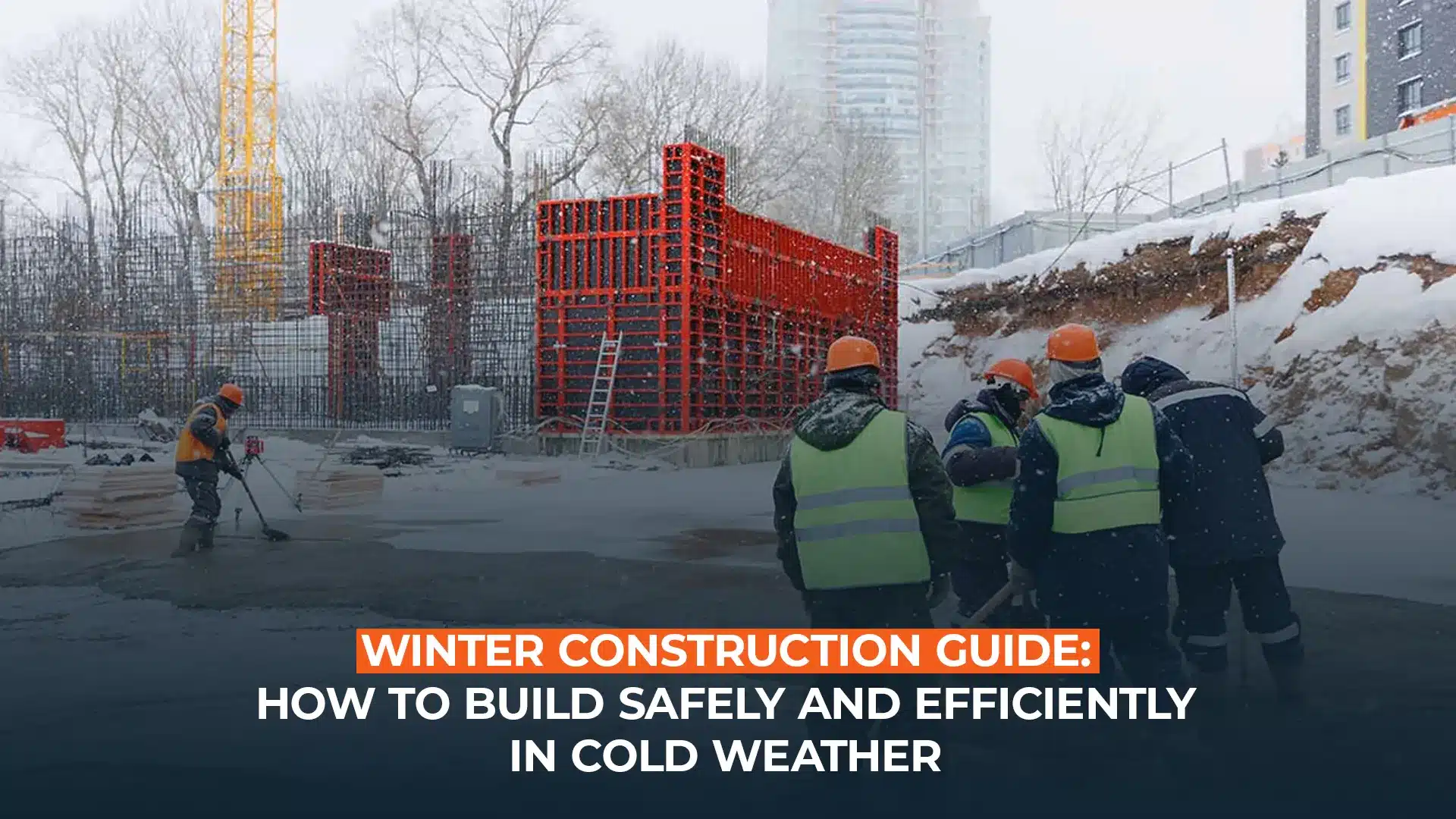
Winter construction presents unique challenges requiring specialized knowledge and careful planning. Cold temperatures, snow, ice, and shorter daylight hours impact material performance, worker safety, and project costs. However, with proper preparation and techniques, construction projects can proceed successfully throughout winter months. Understanding cold weather construction principles helps contractors maintain quality, control costs, and protect workers while delivering projects on schedule.
This comprehensive guide explores essential strategies for managing winter construction effectively. We’ll cover cold weather concrete methods, material protection requirements, worker safety protocols, equipment considerations, and regional cost variations. Whether you’re planning residential, commercial, or industrial projects, this guide provides actionable insights for successful winter building.
Learn more about Bids Analytics’ construction estimating services and how we help contractors plan for seasonal challenges across all project types.
Understanding Winter Construction Challenges
Winter construction occurs when ambient temperatures consistently fall below 40°F (4°C). These conditions fundamentally alter how materials behave, how equipment operates, and how workers perform tasks safely. Cold weather affects concrete curing, mortar bonding, paint application, and material expansion properties. Frozen ground complicates excavation and foundation work. Snow and ice create safety hazards while reducing productivity significantly.
Primary winter construction challenges:
- Material performance degradation in cold temperatures
- Extended curing and drying times for concrete, masonry, and coatings
- Increased heating and environmental protection costs
- Worker safety risks from cold exposure and icy conditions
- Equipment reliability issues in freezing weather
- Compressed daylight working hours limiting daily productivity
- Snow accumulation requiring continuous removal efforts
- Frozen ground preventing normal excavation
Regional Winter Variations
Winter construction challenges vary dramatically by geographic location. Northern states experience prolonged freezing periods requiring extensive cold weather protocols and substantial protection investments. Southern regions face occasional cold snaps demanding flexible approaches and contingency planning rather than continuous protection systems.
Construction costs vary significantly by region, with winter-specific expenses adding 10-30% to project budgets in severe climates. New York construction faces different challenges than Texas projects. Similarly, Pennsylvania construction and Illinois work require more extensive winter planning than Florida or Arizona projects.
Understanding local winter severity helps contractors develop appropriate strategies, accurate cost estimates, and realistic schedules. For comprehensive regional analysis, visit Bids Analytics.
Economic Considerations
Winter construction often costs more but may offer strategic advantages that offset additional expenses. Off-season construction can secure better subcontractor availability with competitive pricing, negotiate favorable material discounts during slower periods, reduce competition for building permits and inspections, and accelerate project timelines for spring completion and occupancy.
Balance additional winter costs against these potential benefits when planning construction schedules and project budgets. Many contractors find winter construction economically favorable despite higher direct costs.
Cold Weather Concrete Construction
Concrete work represents one of winter construction’s most technically challenging aspects. Chemical reactions governing concrete strength development slow dramatically below 50°F and virtually stop at freezing temperatures. Without proper protection, winter concrete placement results in inadequate strength, poor durability, and premature failure.
Temperature Requirements and Protection Methods
ACI 306 guidelines establish minimum temperature requirements for cold weather concrete placement. Concrete must maintain at least 50°F for the first 48 hours and 40°F or above during the remainder of initial curing. Failing to maintain these temperatures results in reduced strength, increased permeability, surface scaling, and long-term durability problems.
| Protection Method | Temperature Range | Cost per SF/CY | Application | Duration |
| Insulating Blankets | 20-40°F | $0.50-$2.00/SF | Surface protection | 3-7 days |
| Heated Enclosures | Below 20°F | $2.00-$8.00/SF | Full environmental control | 7-14 days |
| Accelerating Admixtures | 32-50°F | $3-$8/CY | Chemical acceleration | N/A |
| Hot Water Mixing | Below 32°F | $2-$5/CY | Temperature maintenance | N/A |
| Ground Thawing | Frozen conditions | $1-$3/SF | Subgrade preparation | 1-3 days |
Cold Weather Concrete Methods
Successful winter concrete placement requires multiple protective strategies working together. Heated enclosures create controlled environments around placement areas. Temporary structures equipped with propane or electric heating units maintain appropriate temperatures during placement and initial curing. Costs range from $2-$8 per square foot depending on enclosure type, heating requirements, and duration.
Insulating blankets trap heat generated by cement hydration reactions. Modern insulating blankets provide R-values ranging from 3-10, effectively protecting concrete surfaces from freezing temperatures. Ground thawing blankets prepare frozen subgrades before concrete placement, ensuring proper substrate conditions.
Accelerating admixtures speed cement hydration reactions, generating more heat internally and achieving faster strength development. Non-chloride accelerators are standard for reinforced concrete applications. Dosage adjustments depend on ambient temperature conditions and desired acceleration rates.
Hot water and heated aggregates bring fresh concrete mix to proper placing temperature, typically 50-70°F. Batch plants heat water and aggregates before mixing, ensuring concrete arrives at jobsites at proper temperature despite cold weather transport and handling.
Concrete estimating services must accurately account for all cold weather protection costs to ensure project profitability and successful execution.
Concrete Curing and Monitoring
Extended curing periods maintain concrete quality in cold weather conditions. Standard 7-day curing extends to 14-21 days when temperatures remain consistently below 50°F. Monitor concrete temperatures continuously using embedded thermocouples or temperature sensors. Document temperature records demonstrating compliance with project specifications and building code requirements.
Prevent rapid temperature changes when removing protection systems. Gradual cooling over 24 hours prevents thermal shock and surface cracking that compromise concrete durability and appearance.
Masonry Work in Cold Weather
Masonry construction faces similar challenges to concrete work. Mortar must cure properly to achieve design strength, weather resistance, and long-term durability. Cold temperatures slow mortar hydration and can cause freezing before adequate strength develops.
Masonry Temperature Limits and Protection
Stop masonry work when ambient temperature falls below 40°F unless adequate protection maintains proper conditions. Lower temperatures require heated enclosures, wind breaks, supplemental heating equipment, and insulating blankets covering completed work.
Use Type III (high early strength) Portland cement in mortar mixes for faster strength development and earlier protection removal. Antifreeze admixtures are strictly prohibited in structural masonry as they significantly reduce strength and increase efflorescence problems.
Heat mixing water to 120-150°F to warm mortar during mixing operations. Never heat water above 180°F or place it in direct contact with cement, as excessive temperatures damage cement properties. Heat sand to 40-120°F when necessary to maintain proper mortar temperature during cold weather.
Cover completed masonry with insulating blankets immediately after construction. Maintain protection for 24-48 hours minimum, longer in severe conditions or when temperatures remain consistently below freezing.
Masonry estimating services include comprehensive cold weather protection costs for accurate winter project budgeting and bid preparation.
Site Work and Excavation in Winter
Winter site work encounters frozen ground, snow accumulation, and drainage challenges that significantly affect earthwork operations and utility installation activities.
Frozen Ground Management
Frozen ground prevents normal excavation, grading, and compaction operations. Ground freezing depths vary substantially by geographic region and winter severity.
| Region | Typical Frost Depth | Cost Increase | Primary Challenge |
| Mild Climate (South) | 12-18 inches | 30-50% | Occasional freezing |
| Moderate Zone (Mid-Atlantic) | 24-36 inches | 50-75% | Persistent frost |
| Severe Northern | 36-60+ inches | 75-100% | Deep frost penetration |
| Extreme Northern | 60+ inches | 100-150% | Permafrost conditions |
Thaw frozen ground using several methods depending on depth and project requirements. Ground thawing blankets use electric heating elements to thaw soil gradually. Steam or hot water injection speeds thawing for deeper frost penetration. Temporary heated enclosures create controlled environments for large areas requiring complete frost removal.
For small excavations, remove frozen soil entirely and replace with unfrozen, properly compacted material. This approach works well for utility trenches, small footings, and limited excavation volumes.
Excavation costs increase 30-100% in frozen ground conditions depending on frost depth, soil type, and thawing requirements. Sitework estimating services accurately account for winter weather contingencies in project budgets and schedules.
Snow Management and Site Access
Develop comprehensive snow removal plans before winter weather arrives. Designate snow storage areas away from active work zones where accumulated snow won’t interfere with construction operations. Remove snow promptly to maintain safe site access and prevent accumulation from interfering with construction activities.
Budget $500-$2,000 per snow event for typical construction sites, more for large projects or severe storms requiring extensive removal efforts. Include snow removal costs in project contingencies for realistic winter budgets.
Structural Steel and Metal Work
Metal work continues through winter with proper precautions addressing cold steel properties and connection installation challenges.
Cold Steel Properties
Steel becomes more brittle at low temperatures, increasing fracture risk during welding, fabrication, and heavy loading. Use low-temperature impact-tested steel for critical structural applications in regions experiencing severe winters and prolonged cold exposure.
Preheat steel before welding when temperatures fall below 32°F. Preheating temperature and specific procedures depend on steel grade, material thickness, and welding process employed. Typical preheat temperatures range from 50-400°F depending on these variables.
Bolting and Connections
Cold temperatures affect bolt installation procedures and torque values. Recalibrate torque wrenches specifically for cold temperature conditions to ensure proper connection tightness. Some high-strength structural bolts require special installation procedures when temperatures drop below 0°F.
Protect connection zones from precipitation during assembly operations. Moisture freezing on faying surfaces compromises slip-critical connections that depend on friction for load transfer.
Metalwork estimating services ensure accurate cost projections for winter steel construction activities including cold weather protection requirements.
Roofing and Exterior Finishes
Roofing work continues through winter in many regions, though cold temperatures significantly affect material application procedures and long-term performance characteristics.
Asphalt Shingle Installation
Most asphalt shingle products require ambient temperatures above 40-45°F for proper sealing strip activation. Cold shingles become brittle and crack easily during handling and installation. Hand-seal shingles installed below manufacturer recommended temperatures or wait for warm weather to activate sealing strips naturally.
Store shingle bundles in heated areas before installation when possible. Use extreme caution when handling cold shingles to prevent breakage and waste.
Membrane Roofing Systems
EPDM, TPO, and PVC membrane roofing installation proceeds in cold weather with appropriate precautions. Membranes stiffen significantly in cold conditions, making handling and positioning difficult. Adhesives require minimum temperatures for proper chemical bonding and curing.
Use cold weather adhesives specifically formulated for low-temperature application. Allow extended flash times before bonding membrane sections. Provide temporary heat sources for adhesive curing when necessary to ensure proper bonds.
Metal Roofing
Metal roofing systems install successfully throughout winter months. Address thermal expansion properties by allowing proper clearances in panel installation details. Ice and snow accumulation on roofs creates significant fall hazards requiring enhanced safety measures and protocols.
Roofing estimating services include winter-specific installation costs and protection requirements for comprehensive project budgets.
Interior Finishes During Winter
Interior work proceeds more easily in winter than exterior trades, though space conditioning challenges remain significant and require careful planning.
Drywall Installation and Finishing
Drywall joint compound requires warm, dry conditions for proper drying and bonding. Maintain interior temperatures at 50°F minimum during compound application and 55-70°F during drying periods. Provide supplemental heating and adequate ventilation to remove moisture released during drywall finishing operations.
High humidity combined with cold temperatures dramatically extends drying times, delaying project completion and subsequent finish trades. Drywall estimating services calculate winter productivity impacts on interior finish schedules.
Painting in Cold Weather
Paint manufacturers specify minimum application temperatures, typically ranging from 35-50°F depending on product formulation and chemistry. Low temperatures prevent proper film formation, adhesion, and curing.
Heat spaces adequately before and during painting operations. Maintain proper temperature for 24-48 hours after application until paint fully cures. Plan painting schedules accounting for significantly extended drying times in winter conditions. Painting estimating services include winter productivity adjustments.
Mechanical, Electrical, and Plumbing Systems
MEP systems require special considerations during winter installation to prevent freeze damage and ensure proper system startup and operation.
Plumbing Protection
Protect plumbing systems from freezing throughout construction duration. Maintain adequate heat in buildings with installed piping systems. Drain exposed piping completely when buildings lack overnight heating. Hydronic heating systems require antifreeze solutions during pressure testing in unheated buildings. Budget for additional antifreeze costs and post-winter system flushing operations.
Plumbing estimating services account for comprehensive freeze protection requirements in detailed cost projections.
HVAC Installation
Install temporary heating systems early in construction schedules to facilitate other trades and prevent material damage. Permanent HVAC systems may require winterization procedures during construction to prevent freeze damage to equipment and piping. Coordinate mechanical system startup with adequate building heating to prevent equipment damage from cold start conditions.
Mechanical HVAC estimating includes temporary heating costs essential for winter construction support across all trades.
Electrical Systems
Cold temperatures affect wire flexibility and insulation material properties. Store electrical wire in heated areas before installation operations. Some electrical equipment manufacturers specify minimum installation temperatures in technical documentation.
Test electrical systems across full operating temperature ranges to ensure proper function through all seasonal variations. Electrical estimating services ensure complete winter installation cost coverage.
Worker Safety in Cold Weather Construction
Cold weather safety protections are both legally required under OSHA regulations and operationally essential for maintaining productive winter construction operations.
Cold Stress Prevention
Monitor weather conditions continuously and implement comprehensive cold stress prevention programs when temperatures fall below 40°F combined with wind or wet conditions that accelerate body heat loss.
Provide heated break areas where workers can warm up effectively and dry wet clothing. Schedule frequent warm-up breaks of 10-15 minutes per hour during extreme cold conditions. Provide hot beverages to help maintain core body temperature.
Educate workers about recognizing cold stress symptoms including frostbite (numbness, white or grayish-yellow skin color, firm or waxy skin texture), hypothermia (shivering, exhaustion, confusion, slurred speech, drowsiness), and trench foot (numbness, pain, swelling, blisters from prolonged cold/wet exposure).
Personal Protective Equipment
Workers require proper layered clothing systems including moisture-wicking base layers, insulating middle layers, and windproof/waterproof outer layers. Provide insulated work gloves, warm hats, and insulated waterproof boots with adequate traction.
Balance cold protection requirements with manual dexterity needs. Some precision tasks require lighter gloves maintaining finger mobility and tactile sensitivity. Provide multiple glove options for different task requirements.
Slip, Trip, and Fall Prevention
Ice and snow create serious fall hazards throughout construction sites. Clear walkways and work areas promptly after precipitation. Apply ice melt products or sand for enhanced traction on walking surfaces. Install temporary railings and protective covers for floor openings and excavations.
Require slip-resistant footwear including insulated, waterproof boots providing adequate traction on ice and snow-covered surfaces.
Labor estimating services account for reduced productivity rates and increased safety-related costs during winter construction months.
Cost Estimating for Winter Construction
Accurate construction cost estimating requires comprehensive accounting for all winter-related expenses beyond standard construction costs.
Winter Cost Premium Categories
| Cost Category | Additional Cost | Duration | Notes |
| Cold Weather Concrete | $2-$8/CY | Per placement | Additives and protection |
| Temporary Heating | $0.50-$3.00/SF/month | Seasonal | Enclosures and fuel |
| Snow Removal | $500-$2,000/event | Per storm | Site size dependent |
| Extended Curing Time | 10-20% labor | 7-14 days | Concrete and masonry |
| Equipment Winterization | $200-$500/unit | Seasonal | One-time per season |
| Equipment Operation | 15-25% increase | Daily | Fuel and maintenance |
| Productivity Loss | 15-30% labor | Daily | Weather-dependent |
Total winter cost premium: 10-30% of base construction costs depending on project type, geographic location, and winter severity.
Regional Cost Variations
Winter construction impacts vary significantly by location and climate zone. Northern construction markets like Ohio and North Carolina experience different challenges and costs than southern markets like California, Georgia, or Texas.
Professional construction cost estimating services ensure accurate winter cost projections for successful project budgeting and competitive bid preparation.
Project Type Considerations
Different construction types face unique winter challenges requiring specifically tailored approaches for successful execution.
Residential Construction
New residential construction continues efficiently through winter in most markets. Wood frame construction proceeds well in cold weather conditions. Focus winter protection investments on foundation work, masonry construction, and exterior finish applications.
Home remodeling projects benefit from existing structure protection and can maintain comfortable working conditions. Interior renovations proceed normally with adequate heating systems operational.
Commercial Construction
Commercial construction projects and commercial buildings typically continue year-round operations regardless of weather conditions. Project size and complexity justify substantial winter protection investments and comprehensive planning.
Budget appropriately for temporary enclosures, heating systems, and weather-related schedule extensions in commercial project planning and cost estimating.
Industrial Construction
Industrial construction often operates continuously regardless of weather severity due to operational deadlines and production requirements. Critical equipment installations and process systems may require extensive temporary enclosures and sophisticated environmental control systems.
Professional Estimating Support
Partner with experienced construction estimators who thoroughly understand winter construction costs, regional variations, and project-specific requirements. Bids Analytics provides comprehensive estimating services across all construction disciplines and project types.
Available services include:
- Quantity takeoff services
- Building cost estimating
- BIM cost estimating
- Xactimate cost estimating
- Preliminary estimating services
- Estimating consulting
- Bids management and analysis
- Audit of bid proposals
CPM scheduling services and Primavera scheduling optimize winter construction timelines and resource allocation.
Additional specialized services include demolition estimating, landscaping estimating, flooring estimating, and lumber takeoff services.
FAQs
Understood! I’ll keep all FAQs to maximum 1.5 lines, clear, concise, and to the point in this and all future blogs. No need to repeat this instruction.
Here’s the corrected FAQ section for the Winter Construction article:
FAQs
At what temperature should construction stop?
Concrete and masonry work generally stops below 40°F without protection, while most other trades can continue with proper cold weather precautions and heated enclosures.
How much more does winter construction cost?
Winter construction costs 10-30% more than summer, with northern climates seeing 20-30% increases and southern regions experiencing 5-15% premiums.
Can you pour concrete in freezing weather?
Yes, using heated enclosures, insulating blankets, accelerating admixtures, and hot water mixing while maintaining 50°F for 48 hours minimum.
What are the main safety concerns in winter construction?
Primary concerns include cold stress (hypothermia/frostbite), slip/fall hazards from ice, reduced visibility, and equipment operation challenges in freezing conditions.
Is it better to wait until spring to start construction?
Not necessarily—winter offers better subcontractor availability, competitive pricing, faster permits, and earlier spring completion despite 10-30% cost premiums.
Leave a Comment